
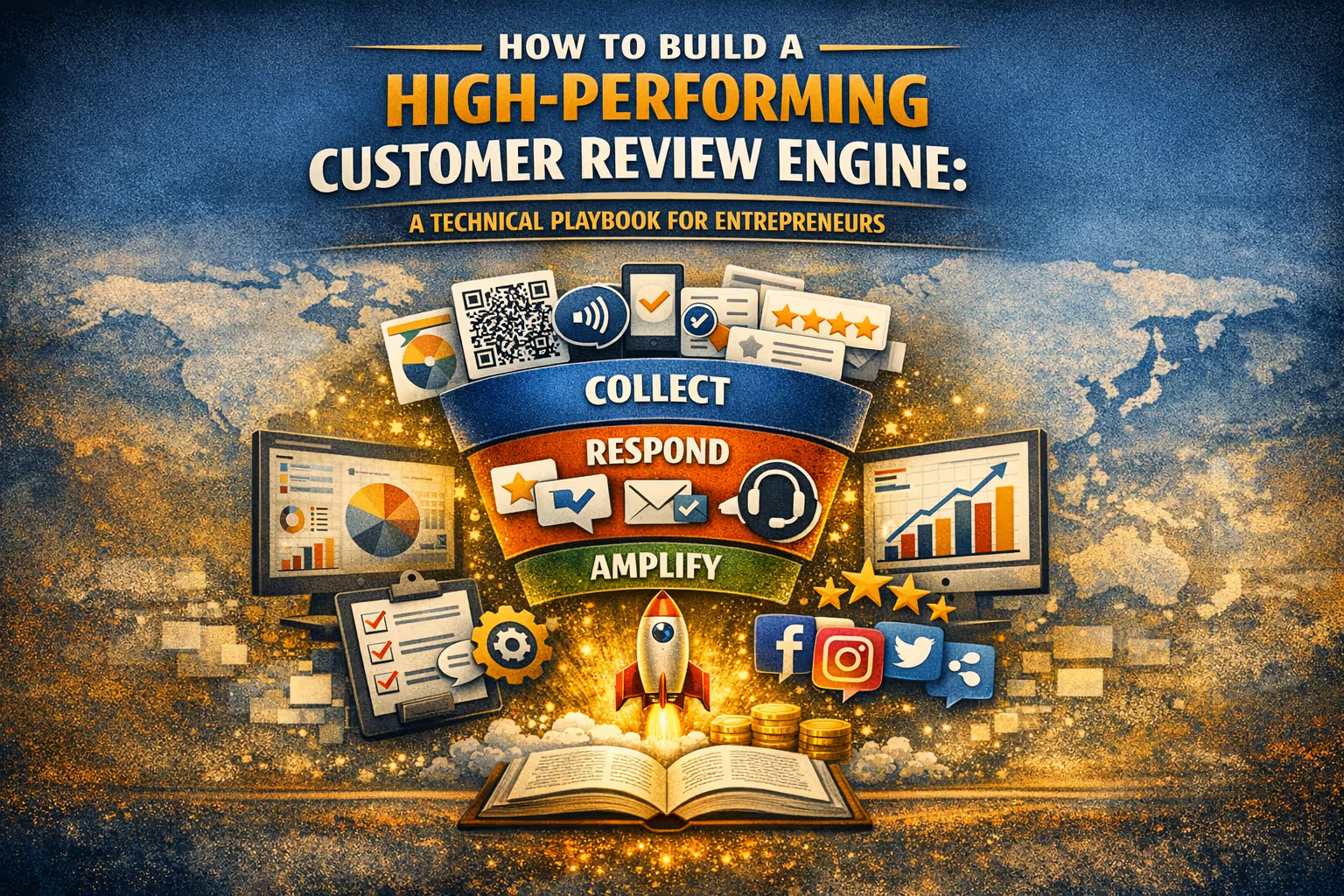
For entrepreneurs, a systematic approach to generating and using every customer review is one of the highest-ROI growth levers. Prospects rely on social proof to de-risk decisions, search engines surface businesses with strong review signals, and teams improve faster with structured feedback. This how-to guide provides a technical blueprint—workflows, tools, and metrics—to build a scalable review engine that fuels revenue and operational excellence.
What a Review Engine Does (and Why It Matters)
A robust customer review program consistently captures feedback across channels, routes it to the right team, responds in brand voice, and turns insights into improvements that compound over time. Done well, it increases search visibility and conversion rates, and customer lifetime value while helping you attract more customer with a good reputation via credible public proof.
Step-by-Step: Build Your Customer Review System
1) Set Clear Objectives and KPIs
Volume & coverage: Target a consistent flow of reviews per product, location, or segment.
Average rating & distribution: Track overall rating and the share of 1–5 star reviews.
Response SLAs: Define time-to-first-response (e.g., under 24 hours for all public reviews).
Customer metrics: Monitor NPS/CSAT and correlate to review trends.
Revenue lift: Measure impact on organic traffic, conversion rate, and CAC.
2) Map Review Touchpoints in the Customer Journey
Post-transaction: Email/SMS review request 24–72 hours after delivery or milestone completion.
On-site/in-app: Contextual prompts after successful outcomes (e.g., feature adoption, ticket resolution).
Offline: QR codes on receipts, packaging, and signage linking directly to your preferred platform.
Support flows: Invite feedback after closed tickets; route detractors to private channels first.
3) Select Platforms and Tools
Public platforms: Google Business Profile, industry directories (G2/Capterra for SaaS, Yelp/TripAdvisor for services/retail).
Owned channels: On-site review widgets, testimonials pages, and case studies.
Management software: Tools like My Client Reviews Me Software (or similar) can automate invitations, centralize reviews from multiple sources, offer response templates, analytics, and (when supported) schema-friendly widgets.
Evaluation checklist: multi-channel invites (email/SMS), contact sync via API/CSV, deduping/opt-outs, bulk personalization, SLA alerts, role-based access, audit logs, and exportable analytics.
4) Automate Review Requests with Compliance
Triggering: Connect your CRM/checkout to trigger invites on delivery confirmation, subscription renewal, or milestone completion.
Timing: 24–48 hours for simple purchases; 7–14 days for complex services to capture outcome-based sentiment.
Segmentation: Tailor copy by product, region, and persona. Consider different prompts for first-time vs. repeat buyers.
Message design: Keep it concise, include the exact 1-click link to your chosen platform, and set expectations (30–60 seconds).
Compliance: Respect SMS/email consent, provide opt-out, and follow platform rules (no gating or incentivizing in prohibited ways).
Sample email template
Subject: Quick favor—share your experience
Body: Thanks for choosing us. Your customer review helps others decide and guides our improvements. It takes under 60 seconds: [Direct Review Link]. If you need support first, reply here and we’ll help immediately.
5) Respond Fast, Professionally, and Publicly
Playbooks: Define tone, ownership, and escalation paths. Aim to respond to all reviews within 24 hours.
Positive reviews: Thank, personalize, and reinforce differentiators. Invite them to try a related feature or product.
Negative reviews: Acknowledge, apologize if appropriate, move to private resolution, and return with a public update when resolved.
Sample response (negative)
“Thanks for the candid feedback, [Name]. I’m sorry we missed the mark on [issue]. I’ve escalated this to our [team], who will contact you within [timeframe] to make it right. We’ll update this thread once resolved.”
6) Strengthen SEO and Conversion with Review Content
Schema markup: Implement Product or LocalBusiness Review schema on relevant pages to qualify for rich results.
UGC integration: Publish verified snippets on product/service pages to reduce friction and increase trust.
Keyword coverage: Surface authentic language customers use; feed it into your on-page copy and FAQs.
Local SEO: Keep NAP consistent, encourage reviews that mention services and locations naturally.
When supported, embed widgets from platforms like My Client Reviews Me Software that pull fresh reviews and maintain compliance with schema guidelines.
7) Close the Loop: Turn Feedback into Fixes
Tagging: Categorize reviews by theme (price, UX, delivery, support).
Root-cause analysis: For recurring issues, assign owners and due dates; track defect removal rate.
Voice-of-Customer reporting: Share monthly insights across product, ops, marketing, and finance.
Customer saves: Track save rate and incremental revenue from resolved detractor issues.
8) Measure, Report, Iterate
Dashboard: Reviews per channel, average rating by segment, response SLA, sentiment trends, and impact on traffic/conversion.
A/B tests: Test request timing, subject lines, and link placement to improve completion rate.
Forecasting: Model how incremental reviews impact search visibility and CAC to prioritize investment.
Governance, Ethics, and Risk Management
Transparency: Never fabricate or filter out negative reviews. Request honest feedback from all customers.
Incentives: If you use incentives where allowed, disclose them clearly and apply uniformly.
Policies: Document response SOPs, legal review, data retention, and escalation for sensitive content.
Privacy: Honor GDPR/CCPA and platform terms. Avoid sharing personal data publicly in responses.
Where Software Fits In
Platforms like My Client Reviews Me Software can operationalize this playbook by syncing contacts, automating timed invites, centralizing a multi-platform inbox, templating responses, and reporting on KPIs. Evaluate based on integration depth (CRM, helpdesk, ecommerce), compliance features (opt-out, gating prevention), analytics, and ease of deployment for your stack.
Conclusion: Turn Reviews into a Compounding Asset
Build a repeatable engine: define KPIs, automate collection, respond quickly, publish ethically, and feed insights back into operations. Start with a 30-day pilot at one location/product, then scale once you’ve validated response SLAs, conversion lift, and governance. With the right workflows and tools—including options like My Client Reviews Me Software—you can leverage every customer review to improve search visibility, boost conversions, and attract more customer with a good reputation while continuously upgrading your product and service quality.